At a glance
The most useful dog walking tools usually cover the diary, dog and client records, invoicing, and a reliable way to keep changes in one place.
The usual problem
Businesses get messy when one tool holds the diary, another holds the invoices, notes live somewhere else, and messages are filling in the gaps.
When people search for tools for dog walkers in the UK, they are often not looking for ten separate apps. They are usually trying to solve a much simpler problem: how do I keep the business organised without feeling like the admin is spread across my whole life?
That is why the best tools are not necessarily the ones with the longest feature lists. The useful ones are the ones that make the week easier to trust. They help you see what is happening, what changed, what still needs doing, and what has already been invoiced or recorded.
The core tools most dog walkers actually need
At a practical level, most dog walkers need a small set of functions rather than a huge tech stack. The exact setup varies, but the core jobs stay fairly consistent.
- A scheduling tool or weekly planner
- A reliable place for client and dog records
- A way to handle invoices and income tracking
- Calendar or route support if the week gets more complex
- A clear system for messages, changes, and notes
The important part is not collecting every possible tool. It is making sure the tools you do use do not create extra duplication around the edges.
Where separate tools start becoming a problem
Separate tools can feel fine at the beginning. A paper diary handles the walks. A spreadsheet handles some records. A banking or invoicing tool helps with money. Messages fill in the bits that do not fit anywhere else. None of that looks too dramatic on its own.
The friction comes later. A change to the diary means something else also needs updating. An invoice depends on notes from somewhere else. A dog detail matters to the walk, but it is buried in an old message. That is when the tool stack stops feeling helpful and starts feeling fragmented.
Do dog walkers need software, or can notes and spreadsheets still work?
Notes and spreadsheets can absolutely work for a while. The question is not whether they are valid. The question is how long they stay calm once the business is busier, more repetitive, and more dependent on small details being right week after week.
Software starts making sense when the business information is living in too many places at once. That is usually the point where it becomes harder to trust the setup, not just harder to use it.
How to compare dog walker app and software options properly
Comparison gets easier when you stop asking which tool looks the fanciest and start asking which one fits the way you actually run the week. Useful questions include:
- Can I see the week clearly enough to plan properly?
- Are dog and client records close to the schedule, or do they live somewhere else?
- Does the invoicing side connect to the work already done?
- Am I paying monthly for features I do not really need?
- Is this helping the business feel simpler or just adding another login?
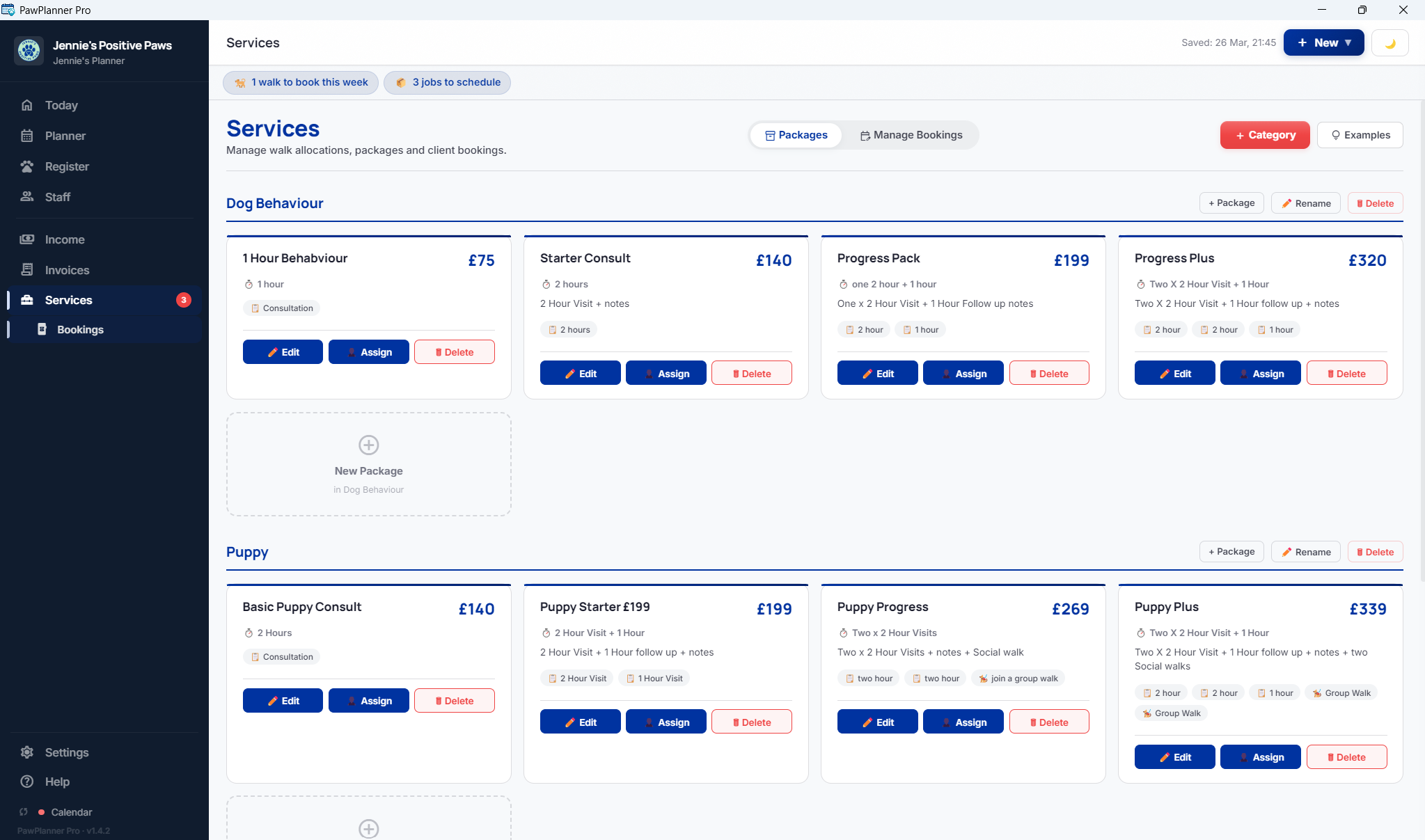
If you are comparing broader software options, the most relevant page after this guide is dog walking software UK, where the product angle is explained more directly.
Why some dog walkers prefer a buy-once setup
Not every business wants another subscription sitting on top of the week. For some dog walkers, a buy-once system makes more sense because it keeps the cost predictable and avoids one more monthly tool bill. That is especially true when the goal is not building a large SaaS stack but simply keeping the business organised.
That does not make subscriptions automatically wrong. It just means the pricing model is part of the comparison too, not an afterthought.
The best tool setup is the one you can trust on a busy Wednesday
A lot of tools look fine when you imagine using them in a quiet hour. The real test is whether they still help when the week is moving, messages are coming in, a booking changes, and you are trying to keep both the dogs and the admin under control.
That is the standard worth using. Not whether the tool seems impressive, but whether it reduces friction in the real week.
FAQ
What tools do dog walkers need in the UK?
Usually tools for scheduling, records, invoicing, and keeping changes in one place. The simpler the jobs are connected, the easier the week becomes to trust.
Do dog walkers need software or can they manage with notes and spreadsheets?
They can manage that way for a while, but software usually becomes the calmer option once repeat bookings, notes, changes, and invoicing all build up together.
What is the best dog walker app or software for UK businesses?
The best option depends on how you run the week and whether you want subscriptions or a buy-once setup. Pack Planner Pro is built for dog walkers who want one Windows desktop system without a monthly software bill.
Why do dog walking businesses end up with too many separate tools?
Usually because each new admin problem gets solved one at a time. Over time the diary, notes, invoices, and messages drift apart into separate systems.