At a glance
The strongest dog walking businesses start with clear services, sensible pricing, and one reliable system for the admin that grows around the walks.
The real challenge
Getting started is not usually the hardest part. Staying organised once the work becomes regular is where things either settle down or start to sprawl.
A lot of advice about starting a dog walking business in the UK makes it sound either too easy or far more complicated than it needs to be. Usually it lands in one of two camps. Either it tells you to print some flyers and just get going, or it drowns you in generic business checklist language that never touches what the work actually feels like week to week.
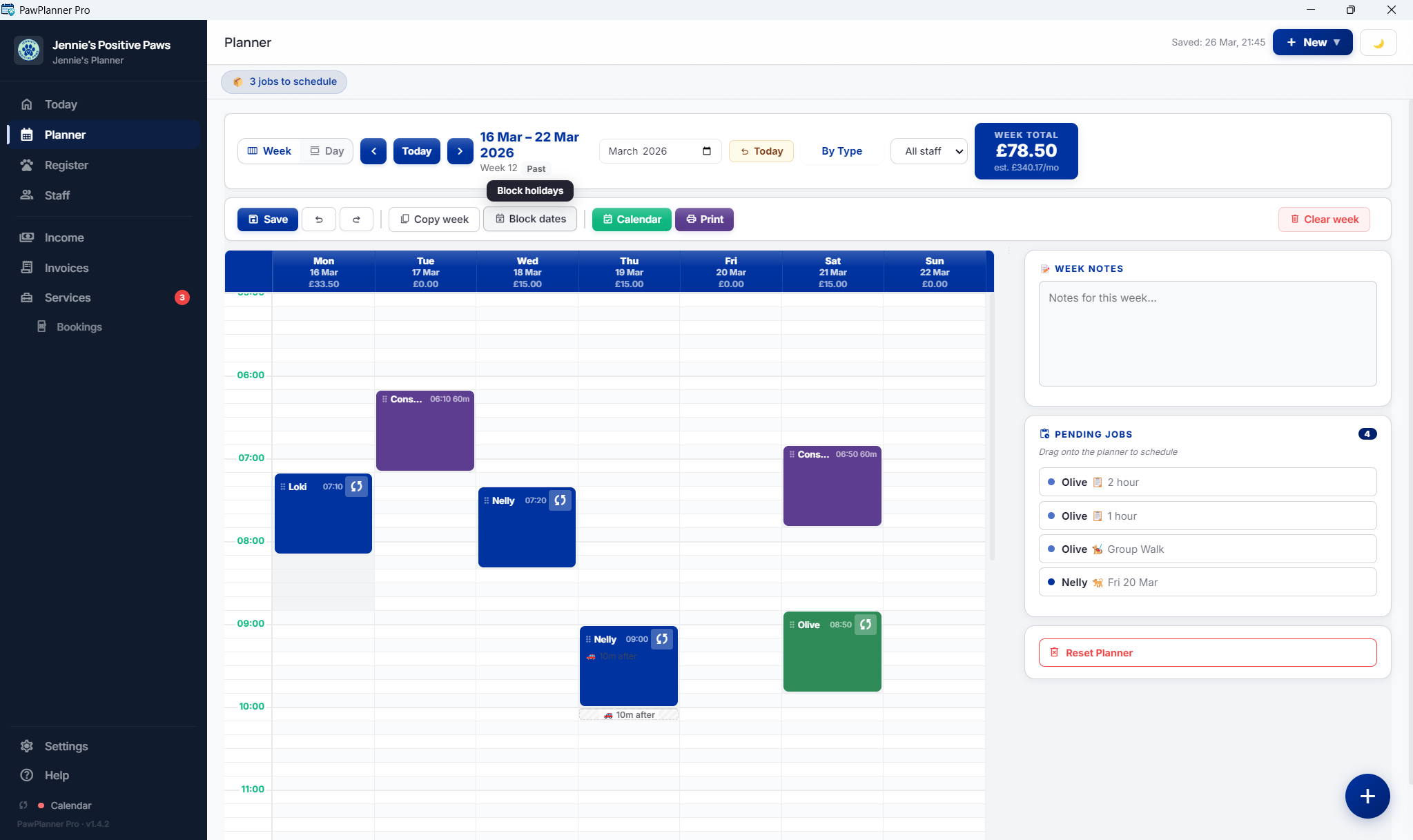
The useful middle ground is more practical. You do need to take the business side seriously. But you also need systems that match the reality of dog walking: changing schedules, repeat clients, dog notes, owner communication, and the small updates that build up once you are properly trading.
Start with the service, not the branding
It is tempting to spend the early stage on names, colours, and trying to make everything look polished. That part has its place, but it is not what makes the business work. Before any of that, you need to know what you are actually offering.
Are you offering solo walks, group walks, puppy visits, pop-ins, or a mix? Are there times of day you can realistically cover every week? Are there areas you can handle without turning the day into one long drive? Those decisions shape everything else: pricing, client fit, and how manageable the week becomes.
Think about trust from the start
When someone hires a dog walker, they are not just buying a slot in the day. They are handing over routine, responsibility, and trust. That means your setup needs to make people feel calm and clear about what working with you will be like.
That shows up in simple ways: clear communication, organised client details, reliable follow-up, and a sensible process for keeping track of dogs, households, and notes. Even before the business is big, those habits make you easier to recommend.
Price for the real business, not just the walk itself
One of the fastest ways to create pressure in a new dog walking business is to charge only for the visible part of the work. The walk matters, obviously, but so do the gaps around it: travel, schedule changes, messages, diary admin, invoicing, and keeping client details straight.
If your pricing ignores that invisible workload, the business can feel busy without actually feeling sustainable. A better starting point is to ask what kind of week you can realistically run, what each slot needs to cover, and how much admin sits behind the work.
Keep records from day one
A lot of dog walkers only start thinking about systems once the admin is already messy. It is much easier if you begin with basic record-keeping early, even if the business is still small. That means having one place for client details, dog notes, recurring arrangements, and anything that changes how the service should be delivered.
- Client names and contact details
- Dog names and relevant care notes
- Regular weekly slots or visit patterns
- Service type and pricing
- Notes that affect access, timing, or behaviour
- A reliable way to track what has been completed and what still needs invoicing
Do not wait too long to tidy the admin side
The admin usually feels manageable right up until it suddenly does not. That point often arrives when you have enough repeat work to feel established, but not enough system to feel in control. You start checking old messages, rewriting notes, and trying to remember what changed this week.
This is where proper software starts to make sense. Not because a startup business needs to look fancy, but because scattered admin drains time and confidence faster than people expect. If you want to see where that shift happens, the strongest next read is moving from spreadsheets to proper dog walking software.
Start simple, but start properly
You do not need a huge setup on day one. You do need a business you can trust yourself to run. That means clear services, sensible prices, reliable records, and systems that can survive a normal busy week.
If you build that foundation early, growth feels much calmer later. If you leave it too long, the business can still grow, but it grows on top of friction.
FAQ
What do I need to start a dog walking business in the UK?
You need a clear service offer, dependable admin habits, and a sensible way to manage clients and dogs from the start. The exact legal and insurance side depends on your circumstances, but the practical system is what makes the week manageable.
How do I get my first dog walking clients?
Most early clients come through trust, recommendations, and being clearly visible to the right local people. Clarity and reliability usually beat trying to look big too early.
How much should I charge for dog walking in the UK?
Your price needs to cover more than the walk itself. Travel, messages, schedule changes, and admin all sit inside the business, so pricing needs to reflect the real week, not just the visible slot.
When should I move from a diary to dog walking software?
Usually when your schedule, dog notes, and invoicing are starting to live in too many places at once. That is the point where software often becomes the calmer option rather than an unnecessary extra.